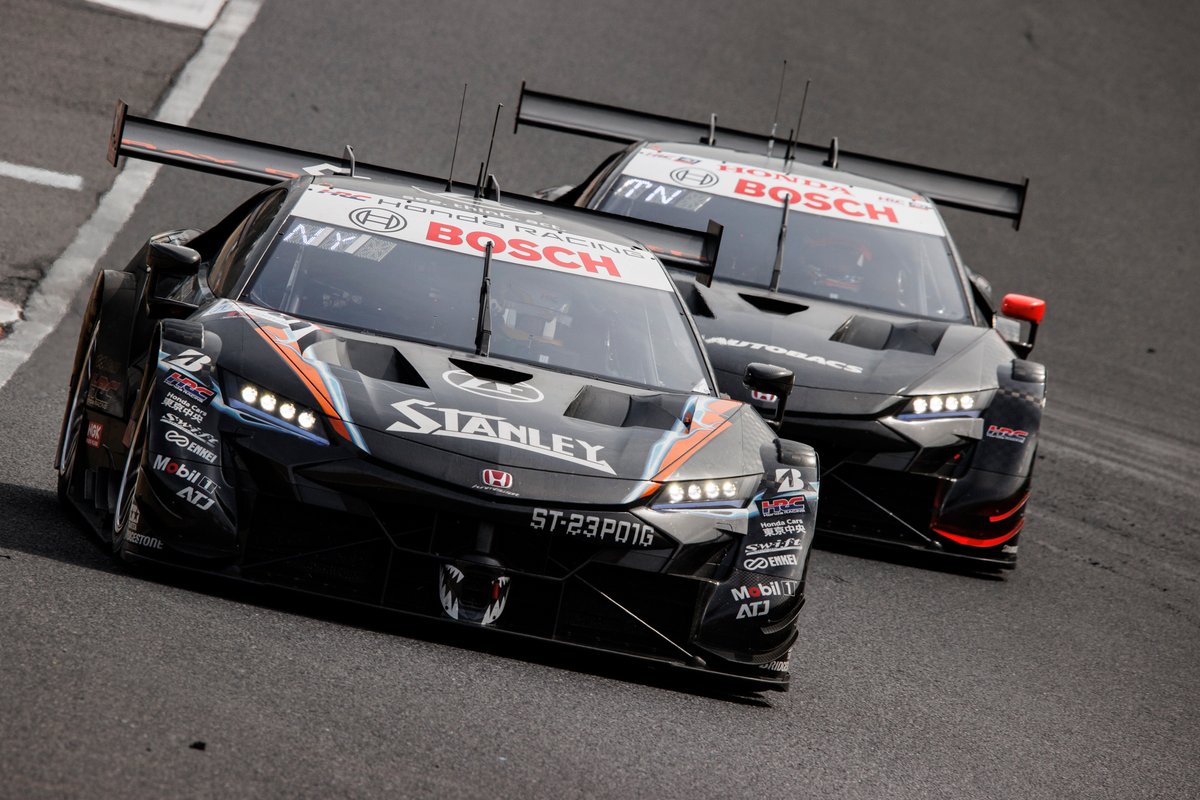
Back in January, Honda revealed a glimpse of the future as it took the covers off its Civic Type R GT500 concept machine at the Tokyo Auto Salon. That car won’t race until 2024, so for the upcoming season Honda finds itself in the odd position of racing a car in SUPER GT’s top category that it doesn’t sell any more.
That’s right — production of the second-generation NSX road car ended last year with a limited run of ‘Type S’ models, a minor refresh that was also applied to the NSX-GT last year, aimed at maximising the car’s aerodynamic prowess.
A slightly fortunate win at Fuji aside, the NSX-GT Type S endured a difficult first half of the season. But once its engine had been upgraded for the final three races, it proved a much more potent force. Without rain at Sugo, it probably would have won there at a canter, but it did go on to dominate at Autopolis with a 1-2 and then win again in the Motegi season finale.
Sadly for Honda, it was just too little too late to erode the advantage of Nissan, whose brand-new Z GT500 proved to be the best all-round car over the course of the season, with Team Impul pair Bertrand Baguette and Kazuki Hiramine hanging on to clinch the title. But by the finale at Motegi, it seemed there was almost nothing to choose between the two brands.
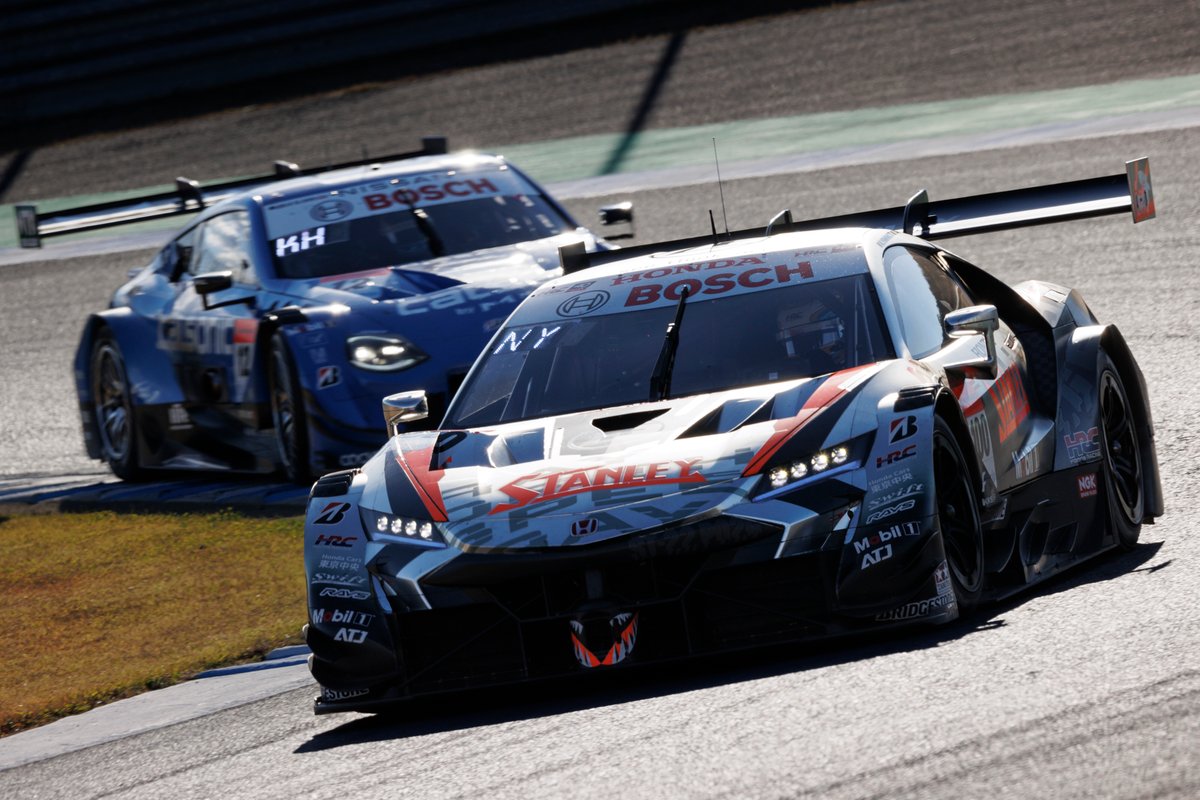
Perhaps that’s why NISMO COO Motohiro Matsumura says that he feels Nissan will not go into the new season with any real advantage over its rivals. On top of that, there are the added variables of carbon-neutral fuel and the minor aero adjustments that Honda and Toyota have made to their cars, despite the aero freeze being ostensibly in place for 2023.
And then there’s Honda’s revised team and driver roster. For the first time since 2016, the marque has four of its five cars on the benchmark Bridgestone tyre, which is a huge coup — SUPER GT may have a four-way tyre war raging, but the reality right now is that if you’re not on Bridgestones or Michelins, you aren’t going to be in title contention.
Essentially, this was made possible by the union between ARTA and M-TEC, the parent company of Team Mugen, to field a pair of cars that will be known as ‘ARTA Mugen NSX-GTs’. It also means that the same driver-engineer combination that has dominated Super Formula for the past two years, that of Tomoki Nojiri and his right-hand man Toshihiro Ichise, will be working together in SUPER GT for the first time, with the massive potential of Toshiki Oyu (on Bridgestones for the first time this year) thrown in for good measure.
Oyu sent shockwaves through the SUPER GT paddock with his new unofficial lap record at Suzuka during manufacturer testing in March, and the consensus seems to be that if he and Nojiri bond well, they could be hard to stop. Mind you, it was the ‘second’ ARTA car shared by two rather less conspicuous members of the Honda roster, Nirei Fukuzumi and Hiroki Otsu, that ended up going fastest overall in the official Okayama pre-season test.
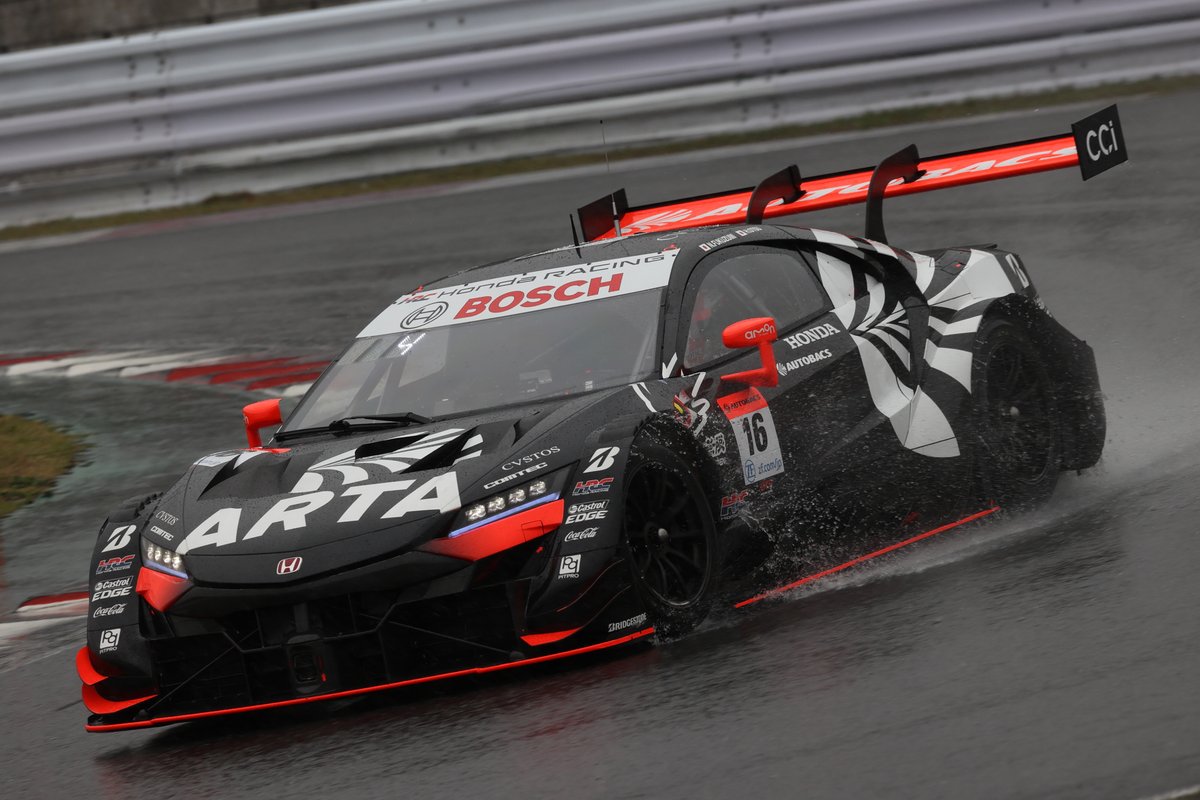
During that weekend, Honda SUPER GT project leader Masahiro Saiki made the claim that Honda had been the GT500 manufacturer most adversely affected by the introduction of the carbon-neutral fuel. Whether that was Saiki’s genuine belief or not, perhaps it stands to reason that the manufacturer that is operating closest to the limit on engine technology, helped by its Formula 1 expertise, would be the most disadvantaged by such a change.
As such, the phase of the season when second engines are introduced promises to be crucial — and if Honda really has been the most badly hit by the switch to CNF, it would be no surprise to see it make the biggest leap forward when the ‘Spec 2’ units are installed.
While ARTA has been grabbing the headlines over the winter, Team Kunimitsu looked like the best all-round Honda squad in the Okayama test taking into account both short-run and long-run pace. Naoki Yamamoto and Tadasuke Makino remain a formidable combination, while chief engineer Satofumi Hoshi is among the very best in the business. Given that the team established by the late Kunimitsu Takahashi has scored the first two titles with the current NSX-GT, a hat-trick would be in some respects fitting.
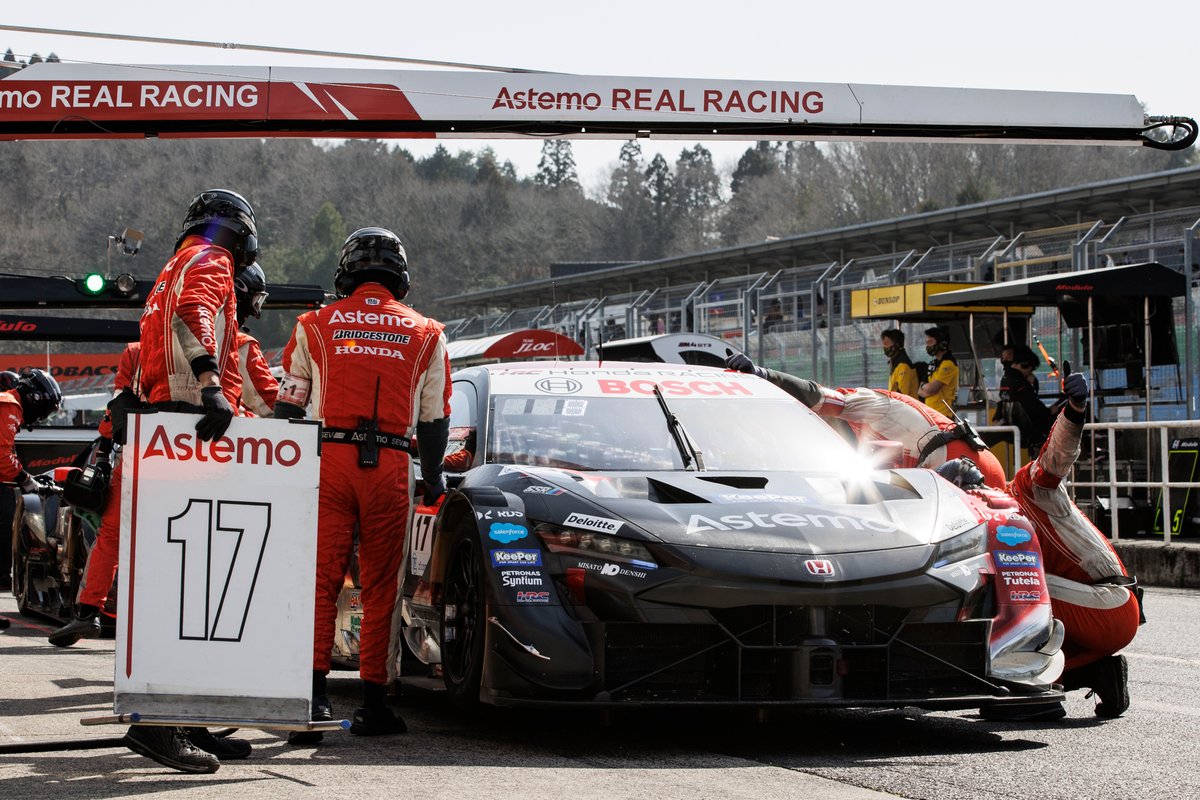
Maybe the Bridgestone Honda team with more of a question mark hanging over its head this season is Real Racing. The relationship between Nobuharu Matsushita and chief engineer Yasuhiro Tasaka appears to have turned sour, as evidenced by Tasaka exiting B-Max Racing in Super Formula. But if the Astemo-liveried car can do anywhere near as well as Koudai Tsukakoshi’s long-run pace from the Okayama test suggests, perhaps all will be forgiven.
What about Toyota, which has had a bit of a strange off-season? For much of winter testing, the GR Supra fleet seemed to be worryingly off the pace, but the evidence suggests that the switch to CNF may have helped it recover some lost ground (again, it figures that the car with what paddock opinion says was the weakest engine might have the most to gain).
Then there was the appendage that appeared on the bonnet of the GR Supras in the Fuji test. Unfortunately, the fact it was wet made it impossible to tell if it was making any difference, but figures from the rival camps were convinced that Toyota wouldn’t have it on the cars if it didn’t boost performance. They were less convinced about its legality…
With five cars on Bridgestones, on paper you would think Toyota has a better chance than most, but only one of those has shown any kind of real form in dry-weather testing, that being the #36 TOM’S car of Sho Tsuboi and Ritomo Miyata. The Rookie Racing combination of Kazuya Oshima and Kenta Yamashita can’t be discounted, especially at Okayama, but they will have a hard time retaining their crown as top Toyota outfit now Tsuboi is paired with a teammate of similar calibre again following a miserable 2022 with Giuliano Alesi.
Both of the past two seasons have shown that Okayama is not a very reliable indicator of the season to come. We’ll probably have to wait until the second round at Fuji in May for a more accurate guide to the competitive order, especially as the speed traps at the Toyota-owned venue promise to properly confirm who is really hot and who is not with the CNF.
But if Honda can get its campaign off to a good start and what has not been a strong track for the NSX-GT in recent years, it will be hard to shake the feeling that, after Toyota stole the title away at the last race in 2021 and Nissan’s new car flattened the opposition last year, that it could be the ‘turn’ of the folks at Sakura to get their hands on title silverware again.