
In 1954, the world championship adopted a 2.5-litre engine formula whose cack-handed introduction had led directly to grands prix having to be opened to Formula 2 cars only for the preceding two seasons. The idea behind advertising the new rules well in advance, in late 1951, had been to give manufacturers time to prepare; instead, many of the existing entrants bailed out, unwilling to invest in building new cars which would be obsolete after just two seasons of competition.
While the 2.5-litre regulations did attract new entrants, many of them missed the start of the 1954 season because they still weren’t ready, despite the notice period.
Also in 1954, Ernest Hemingway won the Nobel prize for Literature for his novella The Old Man and the Sea, wherein – spoiler alert – a perennially unlucky fisherman unexpectedly hooks a massive marlin. But his toil goes unrewarded because the ocean’s other denizens help themselves while he’s towing the prize catch back to port lashed to the side of his skiff.
Along a similar thread, one might wonder what F1’s stakeholders are now thinking, having agreed back in 2022 to the principle of an engine formula embracing a near 50/50 split of electric deployment and internal combustion power. The fundamental purpose of this was to get new manufacturers on the hook and keep the existing ones wriggling in the net.
But while Audi, General Motors and (to a lesser extent) Ford took the bait, Renault is now gone and Honda is probably wishing its collaboration with Aston Martin could sink unnoticed into the depths.
Standing in for Hemingway’s marauding pack of mako sharks, the drivers and now the fans have frenziedly torn apart the results of F1’s fishing expedition.
Audi not only came in as an engine manufacturer, it bought a team
Photo by: Joe Portlock / Getty Images
When the 50/50 principle was rubber-stamped by the World Motor Sport Council in August 2022, it was against a background of Renault continuing to struggle to deliver a competitive power unit, and Honda having already ‘left’, citing a commitment to go carbon-neutral.
Although Red Bull had cued up Porsche as a potential new partner, and Audi was mooted to be evaluating an engine programme, there was a consensus that the only way to get these deals over the line and secure ongoing manufacturer involvement was to simplify the power units and get rid of the MGU-H element, which was difficult and expensive to engineer.
If simplicity was the goal then, given how much complexity has ensued, you have to wonder how they got here from there.
Right in the wheeltracks of the WMSC meeting came the announcement that Audi had committed to an engine programme, naturally framing the new concept as a win.
«This is a major moment for our sport that highlights the huge strength we have as a global platform that continues to grow,» trilled F1 CEO Stefano Domenicali. «It is also a big recognition that our move to sustainably fuelled hybrid engines in 2026 is a future solution for the automotive sector.»
Subsequent developments – Audi deciding to go all-in and buy a team, Honda reversing its decision to withdraw, Ford slotting in to partner Red Bull when Porsche walked away, and General Motors attaching itself to Michael Andretti’s putative 11th entry – added impetus to the narrative that the direction of travel was correct. Amidst this LinkedIn-style chorus of mutual corporate backslapping, it did not appear to strike anyone to consider how the 50/50 formula would work in practice.
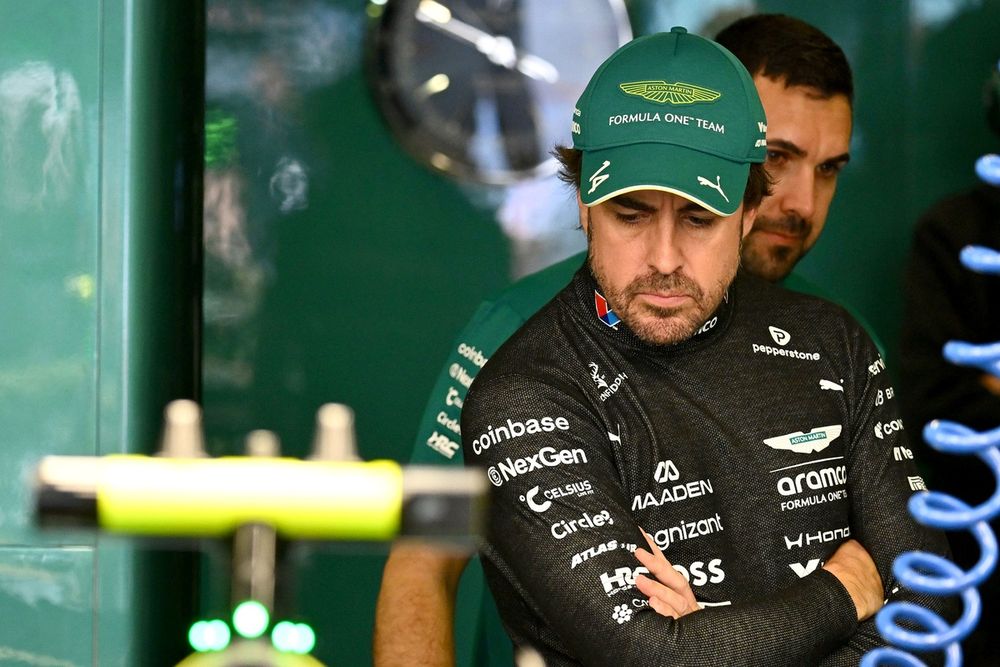
Fernando Alonso had high hopes for Honda’s partnership with Aston Martin but it’s not going well
Photo by: Mark Sutton / Formula 1 via Getty Images
As a result, the background development process over the past couple of years has been one of silk-pursification, or at least rolling the turd in glitter, in the hope that technological progress would mean the show was ‘alright on the night’. As Carlos Sainz has rightly pointed out, active aerodynamics and various other elements of the new formula are, in effect, not just a sticking-plaster solution but a whole collection of them – and all the proposals currently on the table to improve the spectacle involve adding more plasters rather than tearing any off.
There are echoes of history here. For five seasons from 1961 to 1965, grand prix racing downsized from 2.5-liter engines to 1.5. Then as now, the change was telegraphed well in advance, proved massively controversial, and – for the first season at least – resulted in single-team dominance.
The announcement, made on 29 October 1958 at the Royal Automobile Club, overshadowed the purpose of the evening, which was for Mike Hawthorn to be presented with his championship trophy. Autosport founder Gregor Grant was in attendance, and one of many to choke on his gin and tonic.
«There is a story going round that a camel is a horse designed by the FIA,» he fulminated in the following week’s editorial. «Few will disagree that this sums up the position entirely. It is difficult to envisage anyone other than lorry manufacturers attempting to construct a type of machine which bears no relation to a Grand Prix car.
«The crowds which flock to the grandes epreuves will never come to watch the pathetic sight of small-capacity machines dragging along totally unnecessary weight [the limit was originally set at 500kg, later reduced to 450kg] at speeds which are likely to be exceeded by GT cars of even smaller engine capacity. Not only that, but the things have to be equipped with starter motors and roll bars.
«It is obvious that the delegates who supported this decision cannot regard Grand Prix racing in its true perspective. It is the highest form of automobile engineering possible, and with powerful, fast cars, produces the greatest spectacle in modern sport. It offers a challenge to the skill and ingenuity of designers and constructors, who could possibly overcome the restrictions set by the 1961 formula, but would be woefully handicapped by producing machines which no one would wish to watch racing.»
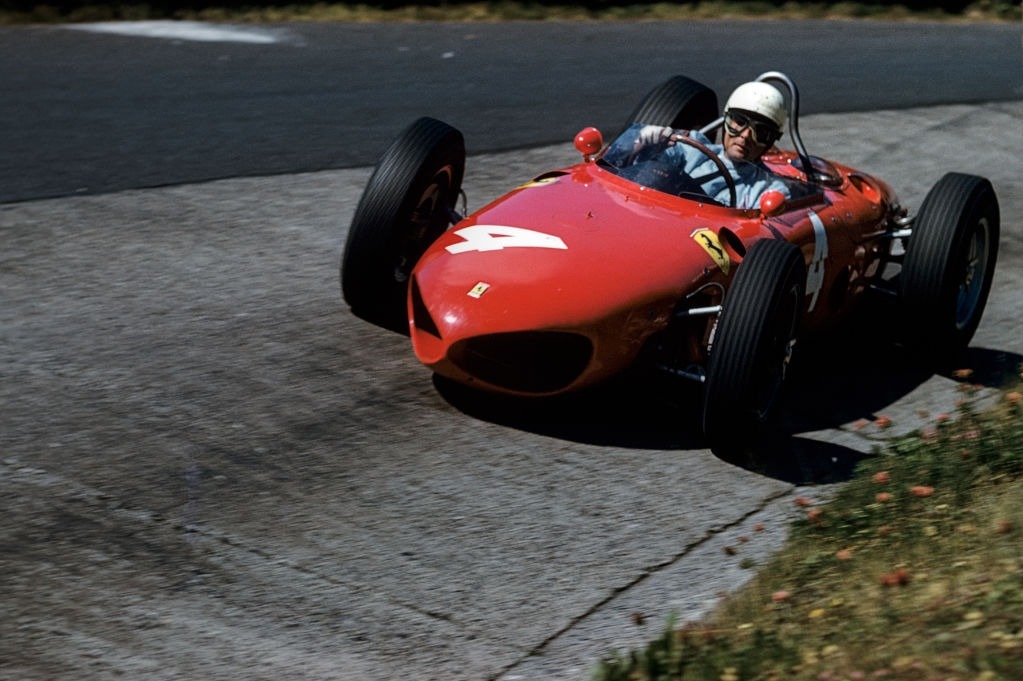
Pretty ‘Sharknose’ Ferrari 156, driven here by eventual 1961 world champion Phil Hill, wasn’t quite the ‘lorry’ envisaged by Autosport founder Gregor Grant
Photo by: Bernard Cahier/Getty Images
Over in the green-bordered monthly Motor Sport, Denis Jenkinson was rather more measured, pointing out that by 1961 the 2.5-litre formula would be seven years old and ripe for replacement – and that the current state of technological process might mean even 1.5-litre engines could be capable of providing sufficient shove.
As it happened, neither scribe was entirely correct, but ‘Jenks’ was closer to the mark: grand prix racing continued to thrive, and the limitations of the engine formula drove advances in chassis construction, aerodynamics and tyres. And as much as the drivers hated it, none of them declined to compete in grands prix (although in those days world championship races accounted for a relatively small proportion of their time and income anyway).
Today the economic realities are different, though. F1’s bottom line is predicated on a belief that the audience will continue to grow «exponentially» (a word beloved of those who haven’t got as far as looking it up in the dictionary). That’s what has got US-based sponsors flocking to get involved, and the same belief system underpins Ford and Cadillac’s involvement.
Hence there is now a level of unease about the response to the new style of racing in which energy management is occupying rather too much of the agenda. It’s been interesting to witness some of the spin applied to it: Channel 4, for instance, which broadcasts the F1 highlights package on UK terrestrial TV, tried to make a joke out of it, hiring comic actor Greg Davies to front a package framing resistance to the 2026 rules as mere fear of the new.
«If nothing ever changed,» he said, «cars would still have carburettors and no seat belts and I’d still be able to smoke in the pitlane.»
As straw man arguments go this was weak indeed; Davies’ character in The Inbetweeners, misanthropic teacher Mr Gilbert, would doubtless have rejoindered to the scriptwriter, «There’s nothing funny about testicles – as you’ll find out tomorrow in my office.»
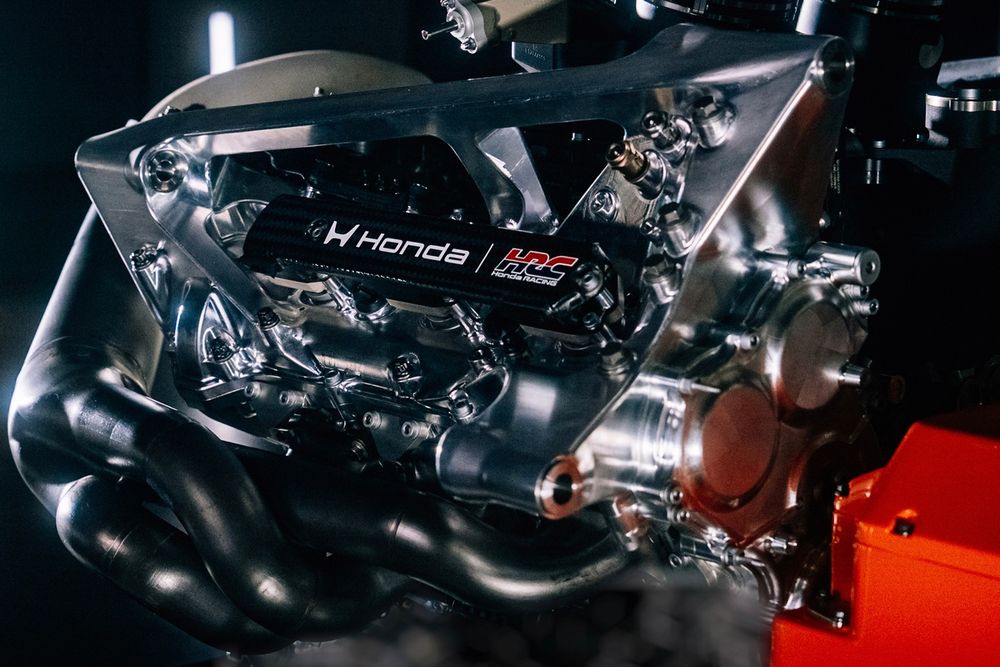
Honda’s RA626H power unit has had a difficult birth
Photo by: Honda
Drivers and long-time fans will have to learn to live with «Mario Kart racing», as Charles Leclerc put it. The effect on casual viewers and the interest level of corporates is yet to be seen.
Perception is everything in Formula 1 and, at the moment, Honda’s predicament is uglier than a kebab shop fist fight. If the intention of the new regulations was to make the field appear more open to outsiders, this has not been borne out based on the state of play thus far, where the most competitive power units have been built by the long-standing manufacturers (or, in the case of Red Bull-Ford, by a newcomer which has bought in existing expertise).
While Honda has theoretically been back in F1 for over a decade, Aston Martin has made much of the claim that many of the engineers responsible for the recent success with Red Bull have been dispersed within the company and are no longer involved.
Renault, meanwhile, has already fired its own power unit division and, regardless of its senior management’s insistence to the contrary, would no doubt be happy to sell its team if the price is right. The minority shareholding held by various sportspeople and celebrities is already being offered around like a tray of cakes.
F1’s recent growth has been fuelled by anticipation of staggering future earnings. The realism of these expectations are open to question – but it’s in the nature of a market economy for sentiment to dictate the direction of travel.
As Mercedes boss Toto Wolff pointed out last weekend, what matters to F1 and its CEO Domenicali is what the fans think about the racing in 2026, not what the drivers say. With the caveat that those with the most negative opinions tend to shout loudest, the overall response has not been positive. F1 itself has taken to ‘hiding’ negative replies to its posts on social media, a project akin to trying to push water uphill.
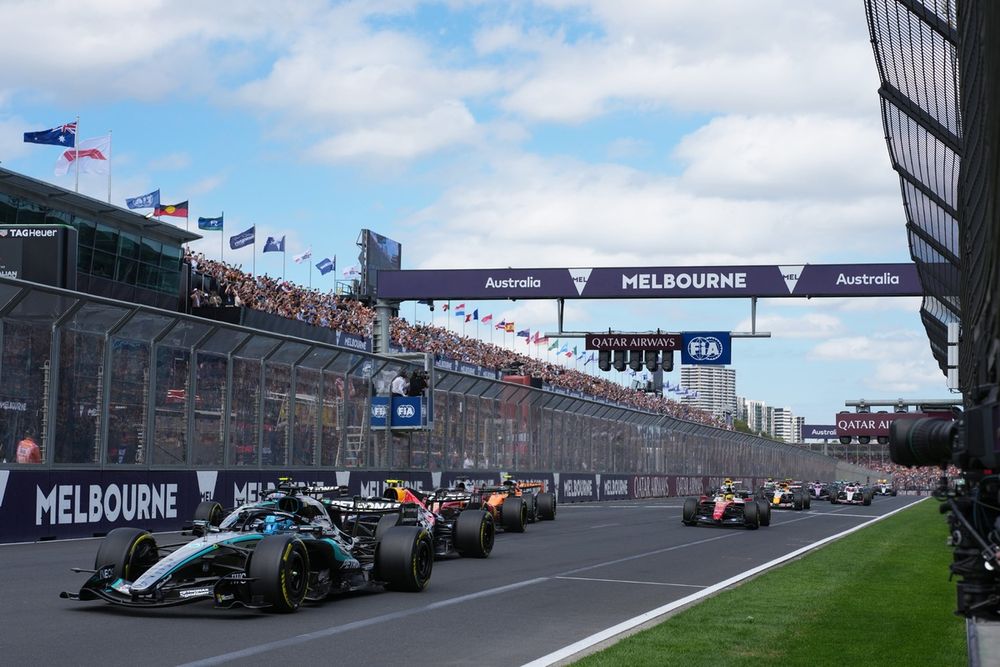
Fan feedback to F1’s new era was mixed at best…
Photo by: Jayce Illman / Getty Images
Given that tweaking the amount of energy which can be harvested and deployed is unlikely to address the root cause of fan dissatisfaction, the likelihood is that a consensus will soon build for change – as we saw early last year with the frenzied calls for a return to naturally aspirated engines sooner rather than later.
Unlike The Old Man and the Sea, this story won’t end with the protagonists retiring to their shack and dreaming of lions on a beach.
We want to hear from you!
Let us know what you would like to see from us in the future.
— The Autosport.com Team


