
While the headline changes in the power unit regulations for the new Formula 1 era in 2026 centre around the mix of power between internal combustion and electrical deployment, the way the FIA measures, controls, and interprets the fuel that reaches the engine through the flow meter is shifting too.
The dual verification system required a profound evolution, given the move to 100% sustainable fuels. As we explained in our first look at the new fuel flow regime, the reference parameter will remain in kg/h (ie the mass flow rate of the fuel), but from this season that value will be converted directly by the Engine Control Unit into an energy flow rate, using the energy density and calorific value of each fuel, certified by an independent body before the car takes to the track.
Overall, the final value must not exceed 3000 MJ/h, determined through formulas that take into account engine speed, load, and the operating conditions of the power unit. In essence, this is a true paradigm shift: the focus moves from the quantity of fuel in terms of mass to its energy content. And this is also why technological research requires ever greater resources.
Materials must be rethought to be compatible with e-fuels
The chemical composition of the new e-fuels is different from conventional ‘dinosaur juice’ and far more complex than it may appear, requiring extensive research to understand which molecules can be used. Practically speaking, they are more aggressive towards hardware, a factor that has forced both manufacturers and the company producing the flow meters to adapt to the characteristics of the new fuels.
Allengra, the company that won the tender to produce the new homologated fuel flow meter, faced two main challenges in developing a robust solution to the more aggressive chemistry of the new fuel: since the unit is installed within the fuel tank, the liquid surrounds it as well as flowing through it.
«For example, there is the issue of the connector,» co-CEO Niels Junker told Autosport.
«The flow meter is installed in the tank, so fuel does not only pass through the sensor – there is also fuel on the outside of the sensor. For this reason, it’s necessary to work with materials that are truly resistant to e-fuels, and this is a huge difference, because today being compatible with fuel is relatively simple.»
Ferrari SF-24 refuel detail
Photo by: Shell Motorsport
Input from suppliers as well as the FIA
Given that the new regulations function as a showcase for sustainable fuels as well as a technology incubator, it was important that materials that would be in direct contact with the fuel didn’t create a limiting factor for development. After consultation with the FIA and fuel suppliers, the company made the outer casing of the flow meter from stainless steel.
For the same reason, the transducers inside the flow meter are also “protected” by a stainless-steel reinforcement. But that’s not all.
“We try to minimise the number of O-rings or seals, because in motorsport every cable and every seal is considered not fully leak-proof with e-fuels: it may be in the short term, but it might no longer be after five or 10 races. It can change, and that imposes a risk,» Junker added.
«Even when talking about the wiring that runs from the flow meter to the ECU, it’s not considered compatible with e-fuels, so it has to be made hermetic and compatible from the electronic connector all the way to the wiring loom.
«We found a solution by sealing the entire inside of the connector, but the problem was also finding the right connectors, because the ones we used in the past were compatible with traditional fuel, but not with e-fuels.
«We therefore had to look for new suppliers. It’s work that takes months. It’s not just about material compatibility, but also about safety considerations and delivery times. We have to guarantee fairness for everyone, so we cannot supply something that risks breaking or not arriving on time.
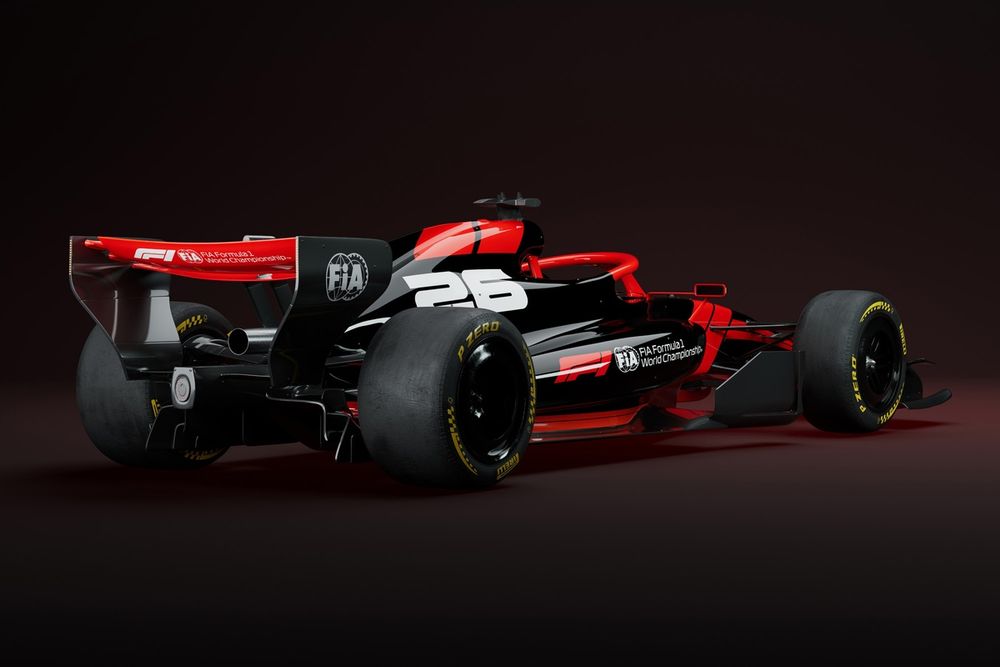
F1 2026 car renders
Photo by: Liberty Media
«Ultimately, we found a solution to make the wiring fuel-tight, but at the same time the teams also have to do their part to prevent any leaks, and in fact they have introduced specific quality checks. Each team manages this aspect differently.
«With e-fuels, the teams send us the fuel and we have to calibrate the sensor and carry out the tests using that specific fuel.»
Research into additives opens up a new (and costly) field of development
The development of e-fuels has opened up a frontier that goes far beyond the simple replacement of traditional gasoline. It is no longer about optimising an existing product, but about building an entirely new fuel, molecule by molecule. In this scenario, alongside fuel development itself, research into additives is becoming one of the main arenas of competition and innovation.
And it is precisely here that FIA regulations introduce a crucial distinction. Additives derived from non-sustainable sources are permitted, but within extremely strict limits and only if they fall into categories that do not improperly alter combustion, thus avoiding disguised performance advantages. This is no small issue, because the additives with the best properties are generally the non-sustainable ones.
The situation is different for sustainable additives. If they’re certified and traced along the entire supply chain, they’re not subject to the same limits imposed on non-sustainable additives. This is one of the fronts on which suppliers’ research is focusing, as they work to develop advanced, sustainable molecules capable of improving stability, resistance to knock, and combustion quality.
It’s no coincidence that suppliers also speak of up to a million simulations to find the right combination.
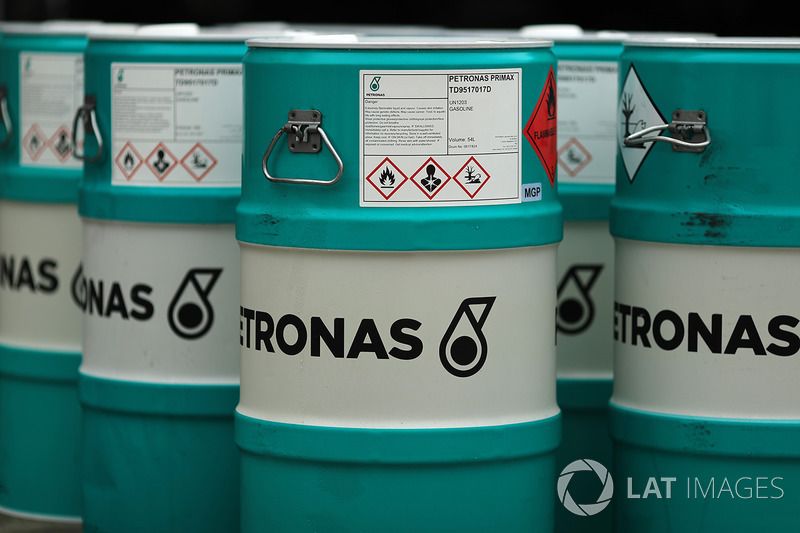
Petronas fuel
Photo by: Sutton Images
This is a complex task, because every component must meet sustainability criteria, have assured availability, and also be compatible with materials. However, it’s an area with enormous potential, on which suppliers have also sought partnerships with external companies possessing advanced expertise in specific fields. This is also why costs are expected to exceed €250 per litre.
It’s not just the liquid itself that carries that value: it’s the research behind it, as well as a supply chain that must be entirely “green”, certified at every step – from sourcing to the emissions of the entire life cycle – which are monitored by the FIA. Improving fuel quality means, for example, being able to obtain the same energy with a slightly lower mass, reducing the amount of fuel that needs to be carried on board.
This is certainly an advantage not to be overlooked in an era where, at least initially, many teams will be well above the minimum weight.
We want to hear from you!
Let us know what you would like to see from us in the future.
— The Autosport.com Team


