
Three weeks before the start of the Dakar, Sebastien Loeb stopped to take stock of his preparation with Dacia, the progress made since last year and the mindset with which he approaches his 10th start.
In an interview with Motorsprot.com, he opens up about reliability, team orders and the uncertainty that comes with the iconic rally-raid.
Motorsport.com: Sebastien, how is this Dakar 2026 shaping up, the second one with Dacia?
Sebastien Loeb: Overall, the car is competitive, which is a good thing. But we’re all very close: the technical regulations mean that car performances are still very tightly matched. We can’t say that we’re above the rest, but we’re in the pack and we’re in a pretty good position.
The last races went well. On a personal level, I had a very bad start to the season with Dakar 2025 and Abu Dhabi, and since then we’ve scored three podiums including a win [at the Rallye du Maroc]. It was a good end to the season, which obviously builds confidence for what’s next. Last year, we arrived at the Dakar without being 100% ready. I think we’re more prepared than last year, and we’ll have to try to put everything together.
MS: The Dacia Sandrider had some teething problems in its first competitions. Over the past year, what have been the main areas of work and what has changed on the car?
SL: What was complicated was solving the electronic fan issues, because we’re working with 48-volt systems which, on paper, complicate the whole operation. A fan, you think it either works or it doesn’t, it doesn’t sound complicated, but managing it with 48 volts is more complex. You also need strategies for it because sometimes the fan will take a bucket of sand, and it has to be able to stop, automatically restart with recovery strategies, and not overload itself.
#219 The Dacia Sandriders Dacia: Sebastien Loeb, Fabian Lurquin
Photo by: Red Bull Content Pool
There were lots of things like that, which were a bit tricky to manage, and that was really the biggest concern. Then there were also weaknesses with the wishbones and links. One of our first development priorities was also to limit punctures. On the previous car, which served as a bit of a reference when we designed the Dacia, we punctured the rear tyres a lot, and we had to analyse and understand why in order to do things differently on the new car.
We had exhausts that were heating up the tyres, and we think that was one of the causes. Then there was a lot of work on the rear dampers to try to relieve the tyre a bit on stone impacts. I hope the fan problems are now definitively resolved, and for the rest, it also seems to be working pretty well.
MS: And in terms of the team itself and how the event is managed, what has evolved since Dakar 2025?
SL: Not much, because Prodrive builds the car. They are a very experienced motorsport team, they know how to run a rally car in competition. The Dakar may have some specificities, but now we’ve been doing the Dakar with Prodrive for five years, so they’re very well drilled in how things work.
Where you always have to pay particular attention is with the car managers, meaning the relationship between the engineer responsible for the car and the chief mechanic responsible for his crew. There really has to be cohesion within that group.
They’re the ones, for example, who know whether the turbo hose removed the day before was correctly tightened to the specified torque. Something like that, a bolt that isn’t tightened, in the middle of a special stage, it’s over if it’s something that fails in the engine bay, because you can’t access it. Changing a wishbone, a steering link, a wheel, that we know how to do. But you need real cohesion and real trust in the engineer responsible for the car and in the team of mechanics working around it.
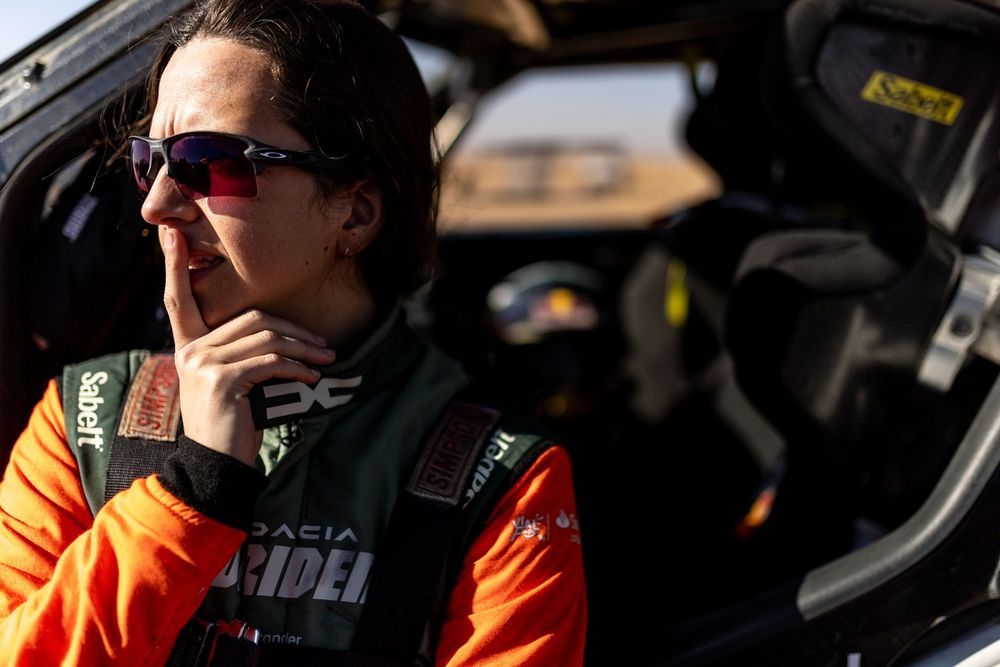
#212 The Dacia Sandriders Dacia: Cristina Gutierrez
Photo by: Red Bull Content Pool
MS: Dacia will field four cars instead of three at Dakar 2026, with Lucas Moraes joining Nasser Al-Attiyah and Cristina Gutierrez. What does that change?
SL: It doesn’t change much in terms of ambitions, even in general. Clearly, it adds one more rival within the team. At the same time, if he wasn’t in the team, he’d be in a rival team anyway. It’s one more car in the team, it makes it a bit stronger, it maybe allows for more feedback every day, because if there’s a problem on one car, it quickly alerts everyone, and everything is always shared to prevent it from happening to the others the next day. It brings more overall experience.
As for the rest of the race, as long as we’re capable of fighting for victory, there are no strategies favouring one driver over another. From the moment one car is completely out of contention and others are fighting for the win, then inevitably, and unfortunately for the one who’s lost out, you have to drive to help the others. But that’s part of racing in a rally like the Dakar. Two years ago, [Carlos] Sainz [Sr] won because he had two team-mates starting behind him in every special stage. That was instant assistance following him throughout the stage. But you need to be able to rely on that, because if he hadn’t had it, he wouldn’t have won.
For Cristina, we’ll see, but the other three of us are potentially three drivers aiming to win. So, as long as I’m not at least 1h30 down from the rally lead, I’m not going to stop. It’s true that having more cars on the road can help with wheels or things like that.
MS: Will you be allowed to fight it out to the end, without team orders, if there’s a tight duel with Nasser Al-Attiyah?
SL: I think so. If we’re neck and neck and battling all the way to the end, then we’ll fight to the end. As long as we feel we have a chance, we won’t give up.
MS: Mentally, how do you approach such an event when you’re chasing victory after finishing second several times, without making it an obsession?
SL: You can think whatever you want, and I’ll think whatever I want! I keep my feet on the ground, and I know that winning the Dakar isn’t just about wanting it and doing things right. You also need some luck. There are rallies I lost because of my own mistakes, and there are rallies we lost through a lack of luck.
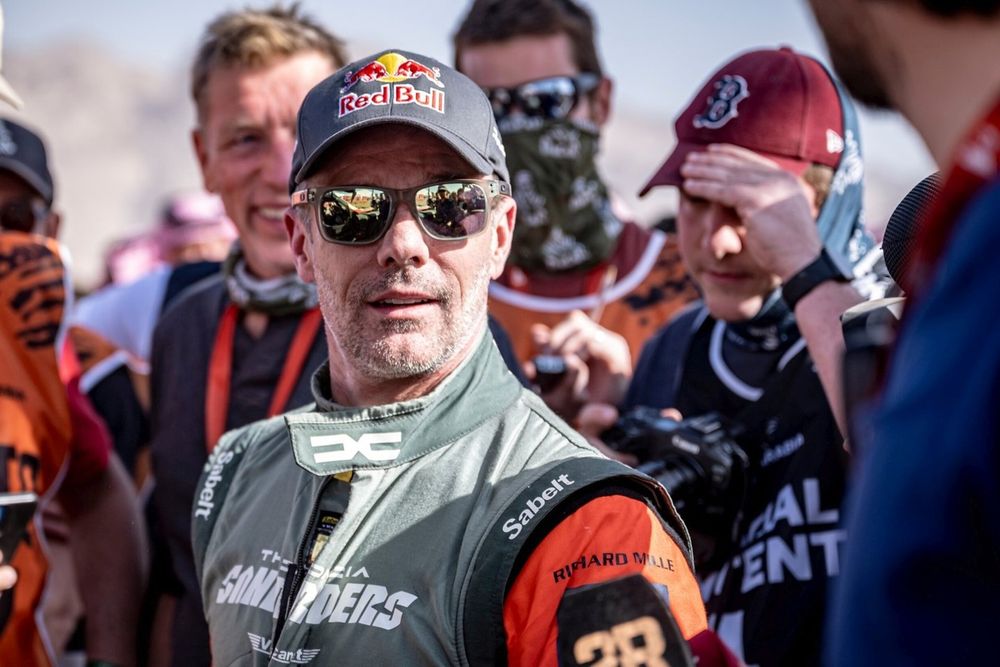
#219 The Dacia Sandriders Dacia: Sebastien Loeb
Photo by: Red Bull Content Pool
It’s not just luck either, we all agree on that, but you still need a bit of that luck factor on your side for things to work out. Of course it would be great to win it, but there’s only one winner each year and I’m not the only one who wants to be. We’ll see!
MS: A word on the route for this 2026 edition in Saudi Arabia?
SL: I haven’t really looked at it. It doesn’t mean much to me because, in any case, you can’t know the special stages, they’re secret until the start. I saw that we’re not going into the Empty Quarter, but the most difficult dunes aren’t necessarily there; they can very well find big sand and dune stages without going there.
For the rest, apparently there will probably be more tracks, but I hope there won’t necessarily be more rocks, for punctures, because it’s sometimes frustrating to be driving at two kilometres an hour and still get a puncture.
MS: What is your mindset ahead of the start?
SL: I’m confident in our level of preparation, and I’m also cautious with that confidence, because I know it’s a rally where anything can happen, at any time. Everyone has experienced having a problem at some point, so it’s difficult for me to be confident over a 15-day rally – it’s impossible.
We want your opinion!
What would you like to see on Motorsport.com?
— The Motorsport.com Team


